The woman behind WTAFL
Hi, I'm Lorraine.
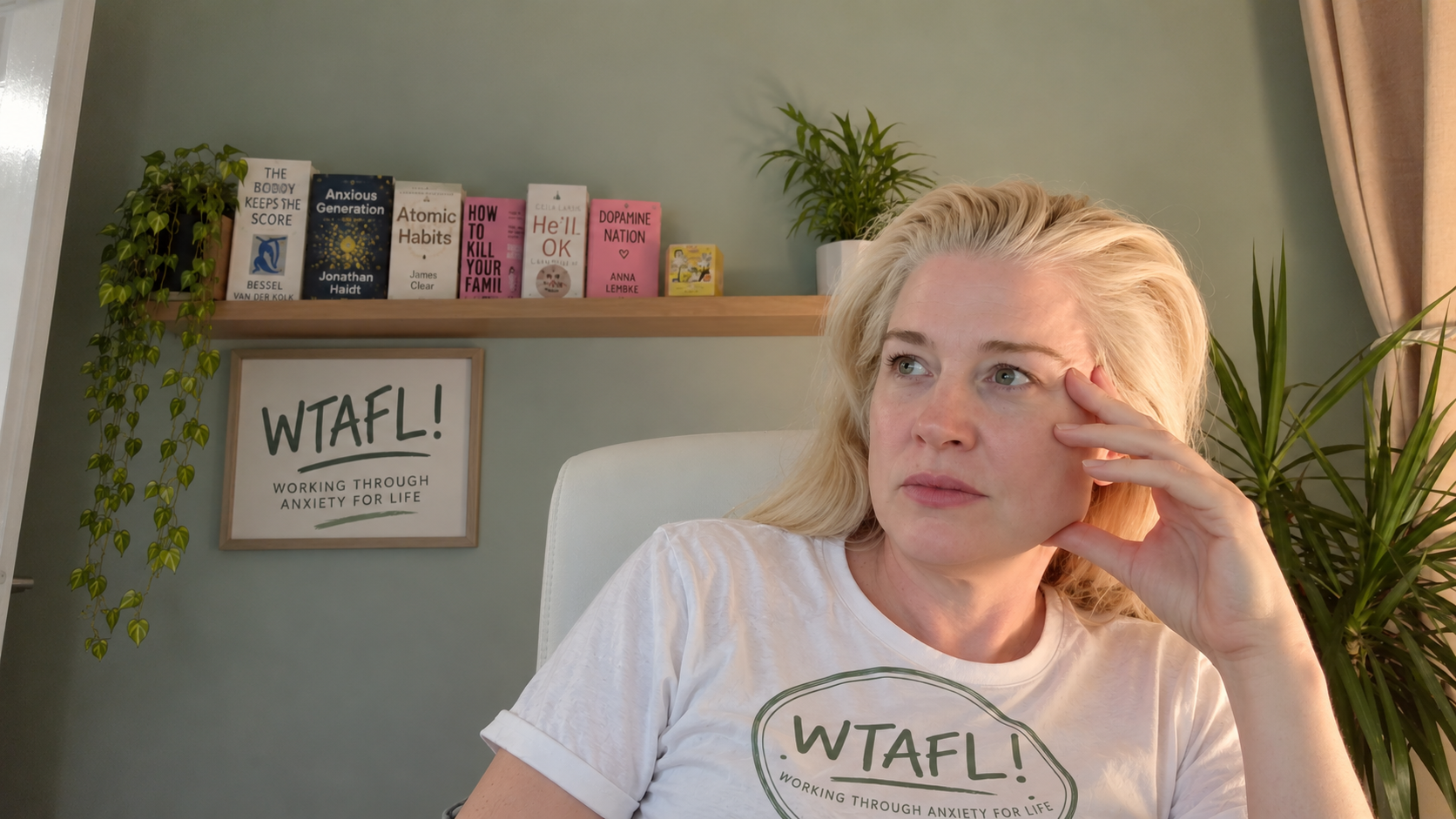
Mum of three, former emergency services worker, education and family support professional, psychology student, and someone who has spent a significant chunk of her working life alongside people having a really bloody difficult time.
I've supported young people who couldn't get through the school gates, parents who were at breaking point, and families who were desperately trying to navigate systems that seemed to require a degree in advanced b*llshit just to get somebody to listen.
I've sat in the school meetings. I've worked alongside attendance teams, safeguarding professionals and local authorities. I've seen the paperwork, the policies, the referrals and the endless conversations about what should happen.
I've coaxed kids out of cars at the school gates and talked them off bridges.
But I've also celebrated the smallest wins. I've watched young people who were absolutely riddled with anxiety start finding their feet again, making progress that once seemed completely out of reach.
And do you know what often made the difference? The right support. The right people. And someone willing to advocate for them when they couldn't advocate for themselves...Until they can.
Because sometimes a young person doesn't need another person telling them what they should be doing. They need someone who understands why they can't do it yet.
And one thing I've NEVER done is tell a parent: “I know your child better than you do.” Because I don't.
You know your child. I bring the professional experience. And somewhere between the two, we can start figuring out what the bloody hell is going on.
Because anxiety doesn't just affect the young person.
There's usually a parent lying awake at 2am wondering what the hell they're supposed to do next.
There's the morning battle over school.
The cancelled plans.
The arguments.
The guilt.
The well-meaning relatives who think they just need a firmer hand.
And somewhere in the middle of all that, there's a young person who isn't choosing to make everyone's life difficult. They're struggling to manage their own.
I've worked with enough families to know that handing someone another bloody breathing exercise isn't always going to cut it.
And as a mum of three myself, I know that parenting doesn't come with a manual. Particularly when life decides to throw the manual out of the window and set fire to the contents.
So why WTAFL?
Because I wanted to create something that felt different, based on years of listening to what young people and their parents actually need.
Something that didn't require young people to sit in a room talking about their feelings for an hour if that wasn't their thing.
Something that didn't leave parents feeling judged, blamed, gaslit or even more bloody confused than when they walked into either another school meeting or a GP surgery.
And finally something that recognised that anxiety can look very different from one young person to the next.
Some withdraw. Some avoid. Some get angry. Some appear to be absolutely fine until they get home and all hell breaks loose.
Neurotypical, neurodivergent, diagnosed, undiagnosed — you're welcome here.
WTAFL is about understanding what's happening, learning practical skills and helping young people gradually get back to doing the things that matter to them.
Not through pressure, promises of miracle cures or another laminated bloody feelings chart.
Through understanding, connection, evidence-informed approaches and a healthy dose of humour.
Because sometimes being able to laugh at the absolute absurdity of a situation is what gets us through it.
What do I actually bring to the table?
Alongside my experience in emergency services and education, my professional background includes:
- Specialist education in a pastoral capacity, supporting young people with social, emotional and mental health needs (SEMH).
- Safeguarding and family liaison, including Deputy Designated Safeguarding Lead responsibilities.
- Family support work through children's social care, supporting families navigating complex challenges, particularly around routines and behaviours.
- Youth Mental Health First Aid training.
- Level 2 Counselling.
- Ongoing study towards a BSc in Psychology with Counselling
My professional development also includes a focus on adolescent anxiety, neurodiversity and evidence-informed approaches to supporting young people and their families.
I understand the education system, the safeguarding responsibilities schools operate under, and the difficult position families can find themselves in when anxiety starts affecting attendance, relationships and everyday life.
But qualifications and experience only tell you so much about a person.
So here's what else you should know.
I'm direct. I'm warm. I swear occasionally. I don't believe in talking to teenagers like they're five, and I certainly don't believe parents need another professional making them feel like they're doing everything wrong.
I'll tell you when something isn't working.
I'll celebrate the tiny wins that nobody else seems to understand.
And I'll work with you to figure out what happens next.
I don't expect young people to fit neatly into a programme. I believe in creating a programme that makes room for the young people who turn up.
And finally...
I'm not here to promise that ten weeks will magically fix everything. Anxiety is complicated. Young people are complicated. Families are complicated.
And progress isn't always a lovely straight line with a motivational quote at the end.
Sometimes it's getting through the school gate.
Sometimes it's ordering their own bloody McDonald's.
Sometimes it's managing something that felt completely impossible a few weeks ago.
Whatever that looks like, we're going to work towards it.
Because young people deserve to do more than just get through the day.
And parents deserve to feel like they've got someone in their corner.
Someone who understands the system, understands the struggle, and isn't going to hand them another bloody leaflet.
That's WTAFL.
Lorraine x
Where anxiety meets its match
Let's talk about your family
An initial conversation is exactly that — a calm chat about what's happening and what might help. Nothing to prepare.
Book an initial conversation